
When you’re living with depression, you might wonder how different treatment options actually work. Selective serotonin reuptake inhibitors (SSRIs), for example, help to make more serotonin available in your brain, improving your mood.
Fortunately, medical experts know quite a bit about depression in 2026. When first-line treatments like SSRIs don’t work, they can target your brain in other ways in an effort to improve your symptoms.
Today, we want to talk about how this works with transcranial magnetic stimulation (TMS).
DLPFC 101
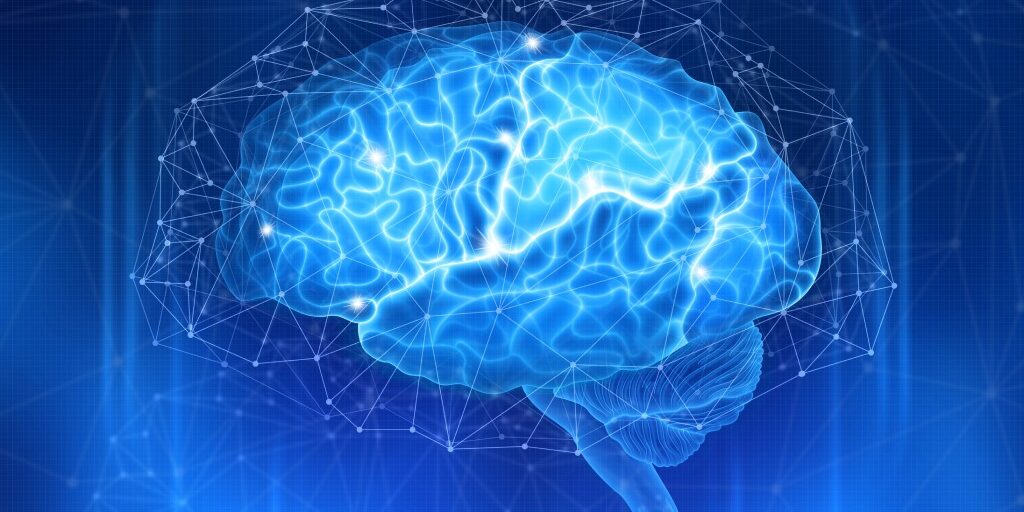
During transcranial magnetic stimulation, you wear a specialized helmet that sends magnetic pulses into targeted parts of your brain. When we’re trying to address depression, we aim those magnetic pulses at your dorsolateral prefrontal cortex, or DLPFC.
The brain has a skill called neuroplasticity. This means it changes in response to outside stimuli, like new experiences. You can thank neuroplasticity for your ability to learn something new.
In people with depression, and especially treatment-resistant depression (TRD), researchers have observed that the neuroplasticity of the DLPFC is often impaired.
Why does this play a role in depressive symptoms? Through advanced brain imaging, researchers have evaluated how this part of your prefrontal cortex plays a role in the way you feel. One study highlighted the DLPFC’s role in helping you process and manage negative emotions. When this part of your brain underperforms, it can contribute to symptoms of depression.
For some people, SSRIs are enough to positively impact the DLPFC. If you have treatment-resistant depression, though, you might need more. That’s where TMS comes in.
Using TMS to target specific brain circuits
Here at Neurology, Psychiatry and Balance Therapy Center, we offer TMS to give you a different way to interact with your dorsolateral prefrontal cortex.
TMS is FDA-cleared for TRD. During treatment, we use gentle, targeted magnetic pulses to stimulate your DLPFC. That magnetic activity helps to wake up neurons that had previously been underperforming in this key part of your brain.
In this way, TMS gives you a tool to address depression at its source. We can apply treatment directly to the part of your brain that’s not working properly.
There’s no medication or sedation required during treatment. You might feel a tapping or clicking sensation against your scalp, but TMS is totally noninvasive and shouldn’t hurt more than some slight discomfort. There’s no downtime afterward, either.
The key to effective TMS treatment is consistency. We typically recommend daily sessions for several weeks. Consistently applying the magnetic stimulation helps to improve function in your dorsolateral prefrontal cortex, waking it up from its underperformance.
If you’re curious to learn more about how TMS works in your brain or to find out if it’s right for you, get in touch with our team at Neurology, Psychiatry and Balance Therapy Center. We can evaluate you based on your symptoms and what kind of treatment you’ve tried in the past.
If TMS makes sense for you, we build a personalized treatment plan. That includes adjusting the precise placement and intensity of the magnetic pulses for your particular brain.