

Mobility and balance are easy to take for granted until something changes. When coordination feels unreliable, when dizziness shows up without warning, or when walking starts to require extra focus, everyday life can become exhausting. People may begin avoiding errands, social plans, stairs, driving, or even simple household routines because they worry about feeling unsteady or falling down. Over time, these limitations can chip away at confidence and independence, leading to a reduced quality of life that affects not only the individual but also the people who care about them.
The good news is that physical therapy is often an excellent option for improving strength, movement quality, and stability, while also helping people better understand and manage symptoms that stem from the nervous system. Through a structured plan and consistent support, many patients are able to move more safely, feel more in control, and return to the activities that matter most. Neurology, Psychiatry and Balance Therapy Center (NPBTC) is highly regarded for its physical therapy near Plymouth Meeting, Pennsylvania.
Request an Appointment
Please do not include medical records or personal health information on this form.
Physical Therapy Near Me
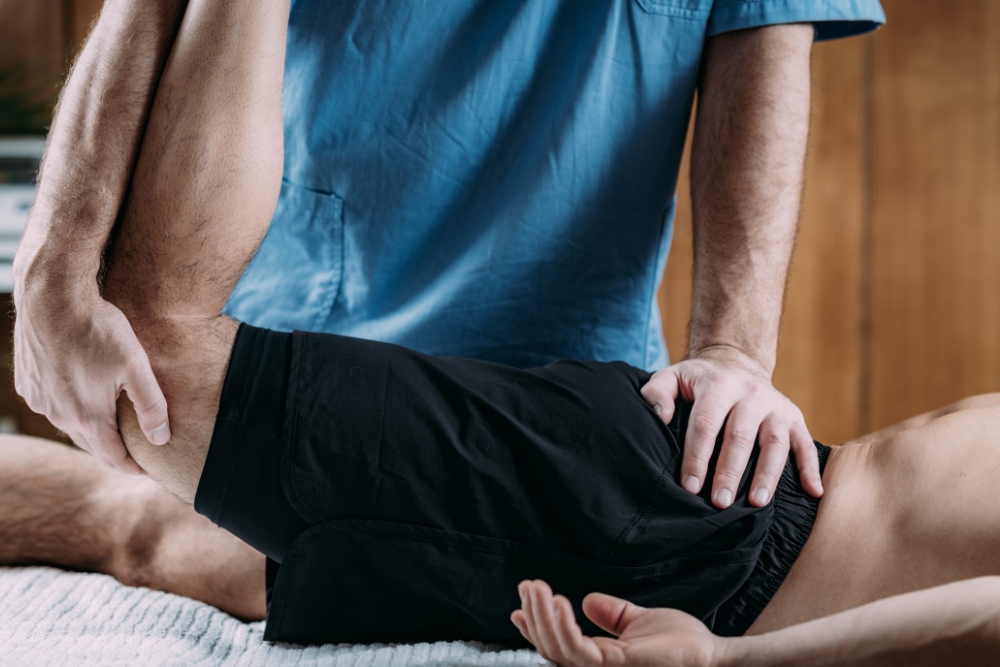
In a general sense, physical therapy is a rehabilitative healthcare service designed to improve movement, strength, and physical function stemming from injury, illness, or neurologic conditions. At its core, physical therapy is a partnership between you and a trained clinician who evaluates how you move, identifies what is contributing to symptoms, and builds a plan to help you move with greater ease and safety.
Depending on the particular diagnosis and goals, physical therapy can include targeted exercises, hands on techniques, balance training, gait training, coordination work, mobility, and flexibility strategies. There’s also education that empowers you to make progress between visits. At NPBTC, physical therapy is especially focused on supporting patients dealing with dizziness, balance problems, and conditions that affect coordination or mobility.
Comprehensive Programs that Help the Brain and Body Work Better Together
A meaningful Plymouth Meeting physical therapy program does more than simply strengthen muscles. It helps the brain and body work together more efficiently. Many balance and movement concerns are influenced by how the nervous system processes information from vision, the inner ear, and sensory feedback from joints and muscles.
When those signals are misread or poorly coordinated, people can feel off balance even if they appear strong. Physical therapy addresses that gap by training movement patterns, rebuilding stability reactions, and gradually increasing tolerance to challenging activities in a safe setting. For many patients, this approach reduces fall risk, restores confidence, and improves day to day function.
At Neurology, Psychiatry and Balance Therapy Center (NPBTC), this kind of care is designed to be both practical and personalized. Your physical therapist looks closely at how you move in real life situations, such as turning your head while walking, navigating busy environments, stepping onto uneven ground, or transitioning from sitting to standing. By identifying the specific moments where your system loses efficiency, we can create a program that targets the true drivers of imbalance instead of relying on generic exercises.
This comprehensive approach also includes education and strategies you can use outside of appointments. Many patients feel more at ease once they understand why symptoms show up and what to do when they do. With consistent training and guided progression, the nervous system can learn more reliable patterns over time, helping you feel steadier, more confident, and more capable in the places and situations that used to feel challenging.
Plymouth Meeting Physical Therapist
Physical therapy can benefit a wide range of individuals. This includes those recovering from injuries as well as those experiencing age-related decline in strength and mobility. It also highly benefits those managing neurologic conditions that affect movement control. At NPBTC, we provide physical therapy for patients facing dizziness and balance disorders, Parkinson’s disease and movement challenges, Functional Neurologic Disorder, gait disturbances and walking difficulties, concussion recovery, and general strength and flexibility loss.
Some people seek care because symptoms are obvious, such as repeated falls, episodes of vertigo, a shuffling gait, or noticeable weakness. Others come in because something feels subtly different, like increased unsteadiness in busy environments, difficulty turning quickly, slower movement initiation, or fatigue that makes walking and standing harder as the day goes on. Physical therapy can help in both situations by identifying contributing factors and building a realistic path forward that matches each person’s needs, comfort level, and lifestyle.
Dizziness and Balance Disorders
Dizziness is a broad term that can describe many different sensations, including lightheadedness, the feeling that the room is moving, or a general sense of being off balance. Balance disorders refer to any condition that causes physical unsteadiness or falling. These concerns can range from mild to severe, and they can be caused by hundreds of different conditions. That is why proper evaluation matters.
At NPBTC, the guiding principle for dizziness and balance care is that the best treatment starts with understanding the cause. Your providers complete a thorough evaluation to identify what is driving symptoms, and then work with you to choose strategies that help you feel better and get back to the activities you want to do. Importantly, NPBTC brings together physical therapy, neurology, and psychiatry when needed, which creates a deeper level of support for complex dizziness presentations. Whether symptoms are neurologic, musculoskeletal, or sensory based, coordinated care helps restore confidence and mobility.
Your PT plan near Plymouth Meeting may focus on fall prevention, steadiness in changing environments, gaze stability work, and progressive balance challenges that rebuild your ability to move without fear. Many patients also appreciate the education component, since understanding what triggers symptoms and how the body responds can reduce anxiety and improve follow through with home exercises.
Functional Neurologic Disorder (FND)
Functional Neurologic Disorder (FND) involves neurologic symptoms such as weakness, movement difficulties, or sensory changes that are not explained by structural damage in the nervous system. Instead, symptoms relate to disruptions in how the brain sends and receives signals. FND is real, often misunderstood, and can be just as disruptive as other neurologic conditions.
Physical therapy can be an important part of care for FND, especially when it is delivered in a way that supports the nervous system and emphasizes retraining movement patterns and restoring trust in the body. At NPBTC, the approach to FND is multidisciplinary, integrating neurology, psychiatry, and physical therapy. Treatment may include education, cognitive behavioral strategies, physical rehabilitation, and coordination with mental health care. Everything is tailored to the patient’s symptoms and goals.
In physical therapy sessions, patients with FND often benefit from structured practice that focuses on normal movement patterns, attention strategies, pacing, and gradual exposure to activities that have become difficult. Care is built around what you need to function better at home, at work, and in the community, with a strong emphasis on restoring confidence and reducing the sense that symptoms are controlling your life.
Other Neurological Disorders
Neurological disorders affect the brain, spinal cord, and nervous system. They can lead to symptoms such as headaches, dizziness, numbness, memory changes, tremors, or seizures. These conditions can impact daily life in many ways, including mood, movement, cognition, and coordination. Because causes and severity vary widely, early evaluation and expert care can make a meaningful difference.
NPBTC specializes in diagnosing and managing a broad range of neurological conditions, including migraines, epilepsy, Parkinson’s disease, multiple sclerosis, and more. We utilize a multidisciplinary approach that may include medication, physical therapy, behavioral support, and ongoing monitoring. Care is led by Dr. Sonya Knight, who is board certified in both neurology and psychiatry, and the team collaborates with other healthcare providers when needed to support seamless care.
For many neurologic diagnoses, Plymouth Meeting physical therapy services can improve functional outcomes even when symptoms cannot be eliminated entirely. Therapy may focus on strengthening, endurance, balance reactions, gait quality, and strategies for energy conservation. It can also help patients adapt safely to changes over time, thereby reducing fall risk and supporting long term independence.
Parkinson’s Disease
Parkinson’s disease is a progressive neurological disorder that affects movement, balance, and coordination. It develops gradually and is linked to the loss of dopamine producing cells in the brain. Symptoms may include tremors, stiffness, slowness of movement, and postural instability. While there is currently no cure, the right care plan can significantly improve daily function and quality of life.
At NPBTC, Parkinson’s care is comprehensive and collaborative. Patients receive expert evaluation and medication management under Dr. Sonya Knight, and the in house physical therapy program includes LSVT BIG, a research based treatment designed to improve movement, balance, and gait in people with Parkinson’s. By combining neurologic insight and physical rehabilitation, the goal is to help patients maintain independence and confidence as they manage symptoms over time.
In physical therapy, Parkinson’s focused work often includes training larger, more intentional movement patterns, improving turning and transitions, strengthening postural control, and practicing real world walking challenges. Therapy can also address freezing episodes, changes in stride length, and the tendency to move more cautiously due to fear of falling.
Vestibular Disorders
Vestibular disorders involve the inner ear and the brain pathways that control balance and eye movements. They can cause vertigo and other types of dizziness, unsteadiness, and visual disturbances. Common vestibular disorders include Persistent Postural Perceptual Dizziness, BPPV, vestibular migraine, and vestibular neuritis.
Because vestibular symptoms can overlap with other neurologic and musculoskeletal issues, treatment works best when the full picture is considered. NPBTC uses a collaborative care model to identify underlying causes and then guide patients through proven interventions that may include vestibular physical therapy, medication management, and neurological consultation. The focus is on reducing dizziness, improving balance, and restoring quality of life in a way that is sustainable.
Vestibular physical therapy may include gaze stabilization, habituation exercises, balance retraining, and in certain cases repositioning techniques when appropriate. Treatment progression is carefully adjusted based on what you can comfortably tolerate so that exercises challenge the system without overwhelming it.
Gait Disturbances and Walking Difficulties
Walking is a complex skill that relies on strength, timing, balance reactions, vision, and sensory feedback. When any part of that system is disrupted, people may develop gait changes such as shortened steps, slower pace, difficulty clearing the feet, or instability during turns. Gait disturbances can appear with neurologic conditions, after concussions, during periods of deconditioning, or alongside dizziness and vestibular issues.
At NPBTC, our physical therapists near Plymouth Meeting aim to improve safety and efficiency. That may include strengthening key muscle groups, improving mobility in the hips and ankles, training balance reactions, and practicing walking in a variety of environments. Therapy also helps patients rebuild confidence, since fear of falling can create stiff movement patterns that make instability worse.
Concussion Recovery
After a concussion, symptoms can involve more than headaches. Many people experience dizziness, visual sensitivity, balance problems, difficulty with busy environments, and fatigue that makes activity feel draining. Physical therapy can be an important part of recovery by addressing balance and vestibular involvement, retraining coordination, and supporting a gradual return to normal movement and activity.
Concussion recovery work is typically paced and individualized. Therapy may focus on balance retraining, gaze stability, tolerance for head and body movement, and rebuilding confidence with daily tasks. When symptoms overlap with vestibular disorders or neurologic conditions, coordinated care becomes especially valuable.
General Strength and Flexibility Loss
Not every physical therapy patient has a specific diagnosis like Parkinson’s disease or a vestibular condition. Many people simply notice that strength, flexibility, and stamina are declining. There may be difficulty getting up from a chair, climbing stairs, carrying groceries, or maintaining balance when distracted. This can happen with aging, after illness, or following a period of reduced activity.
Physical therapy helps rebuild a foundation for safer movement. A structured plan can improve leg strength, core stability, joint mobility, and overall conditioning, all while supporting better posture and balance. Over time, this often leads to improved independence and a greater sense of control in day to day life.
PT Services near Plymouth Meeting, Pennsylvania
Your Plymouth Meeting physical therapy journey at NPBTC begins with a detailed assessment that looks at strength, mobility, balance, and movement quality. The first session includes a full physical and balance evaluation, and from there, the plan may include one to three sessions per week depending on goals. Care is delivered using evidence based techniques and focused one on one attention, with support throughout the process.
A Customized Physical Therapy Plan
As therapy progresses, your plan is adjusted based on how you respond. You can expect a combination of in clinic work and a home program designed to reinforce progress between visits. Many patients find that having clear guidance, measurable goals, and ongoing feedback makes it easier to stay consistent. The overall experience is intended to feel structured and encouraging, with the goal of making improvements that carry over into real life.
NPBTC’s Commitment to Delivering Better PT Outcomes
Physical therapy at NPBTC is not a one size fits all experience. Patients are seen one on one for up to an hour and receive a personalized evaluation and care plan. The physical therapy team includes Dr. James Barsky and Dr. Ian Haslam, both licensed Doctors of Physical Therapy. They coordinate closely with Dr. Sonya Knight to ensure each plan reflects the full picture, including neurologic, psychiatric, and physical considerations.
This neurologically informed model matters because many mobility and balance challenges are not isolated problems. Dizziness can be influenced by vestibular pathways, visual processing, musculoskeletal mechanics, and stress responses. Movement disorders can affect posture, gait rhythm, and confidence, which can then impact activity level and overall conditioning. By coordinating across specialties when appropriate, NPBTC is able to take a more complete view of what is happening and align care around outcomes that matter most, such as walking safely, reducing dizziness, avoiding falls, and returning to meaningful activities.
NPBTC is also widely recognized for its depth of experience in treating complex dizziness and balance presentations, with over 37 years of combined experience specializing in dizziness and balance disorders. That experience, paired with coordinated care, helps patients feel supported and understood, especially when symptoms have been difficult to explain or resolve elsewhere.
Our Plymouth Meeting Physical Therapy Center is Here to Help
If you are dealing with dizziness, vestibular symptoms, Parkinson’s disease, Functional Neurologic Disorder, gait changes, concussion related balance issues, or a general decline in strength and flexibility, physical therapy may be a practical and empowering next step. At Neurology, Psychiatry and Balance Therapy Center (NPBTC), our goal is to help you move more confidently, reduce fall risk, and build skills that translate into everyday life. We deliver care that is grounded in neurologic insight and personalized support.
NPBTC is a top choice for physical therapy services near Plymouth Meeting, Pennsylvania, and we proudly serve patients from all throughout the region. If you are ready to take the next step, call us at (215) 591-0700 or request an appointment online to get started.
Physical Therapy Services near Ambler, Blue Bell, Bridgeport, Colmar, Conshohocken, Dresher, Eagleville, East Norriton, Flourtown, Fort Washington, Glenside, Gwynedd Valley, Gwynedd, Hatboro, Horsham, King of Prussia, Kulpsville, Lafayette Hill, Lansdale, Norristown, North Wales, Oreland, Plymouth Meeting, Skippack, Spring House, Trooper, West Norriton, Willow Grove, Worcester, Wyndmoor, Ambler Yards, Ambler, Arlingham, Blue Bell, Belfry, Blue Bell, Blue Bell Woods, Blue Bell, Broad Axe, Blue Bell, Cedar Hill, Blue Bell, Center Square, Blue Bell, Custer, Blue Bell, Downtown Ambler, Ambler, Lower Gwynedd, Blue Bell, Normandy Farm area, Blue Bell, Parec Plaza, Blue Bell, Penllyn, Blue Bell, Sunnybrook, Blue Bell, Upper Dublin, Blue Bell, Whitpain Farm, Blue Bell, Whitpain Hills, Blue Bell, and surrounding areas.