
Obsessive-compulsive disorder (OCD) can become deeply disruptive when intrusive thoughts, urges, fears, and repetitive behaviors begin to consume significant amounts of time or interfere with everyday life. For many people, psychotherapy and psychiatric treatment provide meaningful improvement. Others, however, continue to experience persistent OCD symptoms despite participating in therapy, trying medication management, or combining multiple of these first line approaches. When symptoms remain difficult to control, exploring an additional treatment option may be appropriate.
Neurology, Psychiatry and Balance Therapy Center (NPBTC) is pleased to offer TMS for OCD near Upper Dublin, Blue Bell, Pennsylvania, for individuals whose obsessive-compulsive symptoms have not improved sufficiently with more traditional forms of care. Deep Transcranial Magnetic Stimulation provides a noninvasive treatment option that uses magnetic stimulation to target brain circuits associated with obsessive thoughts, compulsive behaviors, and emotional regulation. NPBTC offers Deep TMS using BrainsWay technology as an FDA-cleared option for OCD, with treatment considered as part of an individualized plan based on each patient’s symptoms, history, and goals.
Request an Appointment
Please do not include medical records or personal health information on this form.
TMS Therapy for Obsessive-Compulsive Disorder Symptoms Upper Dublin, Blue Bell, PA
Psychotherapy, also known as talk therapy, and medication management are important components of OCD treatment, and many patients benefit from these approaches. Yet OCD can be particularly persistent. A person may make progress in therapy and still experience intrusive thoughts that feel overwhelming. Medication may reduce the intensity of some symptoms without providing enough relief to restore normal day-to-day functioning. In other cases, side effects or an incomplete response may make it necessary to consider additional treatment strategies.
For someone who has already invested considerable time and effort in treatment, continuing to struggle can be discouraging. Obsessions may still dominate attention, while compulsions can continue to dictate routines, decisions, and behavior. Family members may also see how much time and emotional energy their loved one is spending trying to manage fears or complete rituals, even when the person recognizes that the patterns are excessive or unwanted. TMS can offer another option for appropriate patients whose symptoms remain significant despite medication or psychotherapy.
Understanding Persistent Obsessive and Compulsive Symptoms
OCD is more than being highly organized, preferring routines, or worrying from time to time. It can involve recurring intrusive thoughts and intense anxiety along with compulsive behaviors or mental rituals that feel difficult to resist. These symptoms often become so ingrained that they interfere with relationships, school, work, responsibilities, and overall quality of life.
The way OCD presents can vary significantly from one person to another. Some individuals may repeatedly check locks, appliances, messages, or other details because of a persistent fear that something is wrong. Others may struggle with cleaning rituals, counting behaviors, reassurance seeking, avoidance, or recurring mental loops that are difficult to interrupt. As there is a wide range of possible symptom patterns, it is quite important to evaluate how they affect the individual patient’s daily functioning.
When these patterns remain severe despite previous treatment, a more comprehensive approach may be needed. The objective is not simply to stop one outward behavior, but to consider the larger cycle of intrusive thoughts, emotional distress, and compulsive responses that continues to reinforce the disorder.
Why Additional OCD Treatment Options May Be Needed
There is no single treatment experience that applies to every person with OCD. One patient may experience considerable improvement through psychotherapy but continue to struggle with a particular group of intrusive thoughts. Another may respond partially to psychiatric medication while still experiencing rituals that interfere with work or family life. Someone else may have tried several combinations of care without achieving the level of improvement they need.
When first line treatment has not produced adequate relief, exploring another therapeutic approach does not mean that previous care has failed or should automatically be abandoned. Instead, the patient’s response to earlier treatment provides important information that can help guide what comes next.
For some individuals, Deep TMS may become an additional component of care. Because it works through targeted magnetic stimulation rather than another medication, it offers a different way of addressing the brain circuits associated with OCD symptoms while allowing psychiatry, psychotherapy, medication management, and other services to remain part of the broader treatment strategy when appropriate.
Upper Dublin, Blue Bell Transcranial Magnetic Stimulation Treatment for Managing OCD
Transcranial Magnetic Stimulation uses magnetic pulses to stimulate targeted areas of the brain. In the treatment of OCD, the goal is to influence brain circuits associated with repetitive patterns of thought and behavior, obsessive thinking, compulsive urges, and emotional regulation.
This brain-based approach distinguishes TMS from both psychotherapy and medication management. Psychotherapy works through therapeutic techniques designed to change patterns of thought and behavior, while medication acts through pharmacological processes within the body. TMS provides another treatment mechanism by directly stimulating targeted neural regions without introducing a new medication.
For patients who continue to experience significant OCD symptoms despite appropriate first line treatment, this difference can make Upper Dublin, Blue Bell TMS therapy for obsessive-compulsive disorder an option worth discussing with our NPBTC team.
Deep TMS for Obsessive-Compulsive Disorder
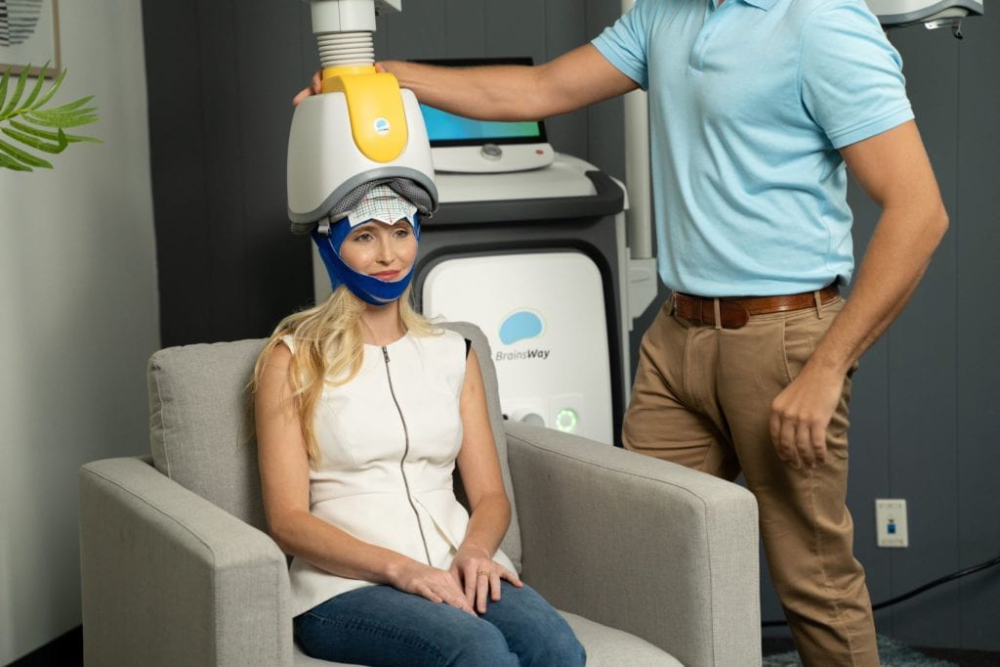
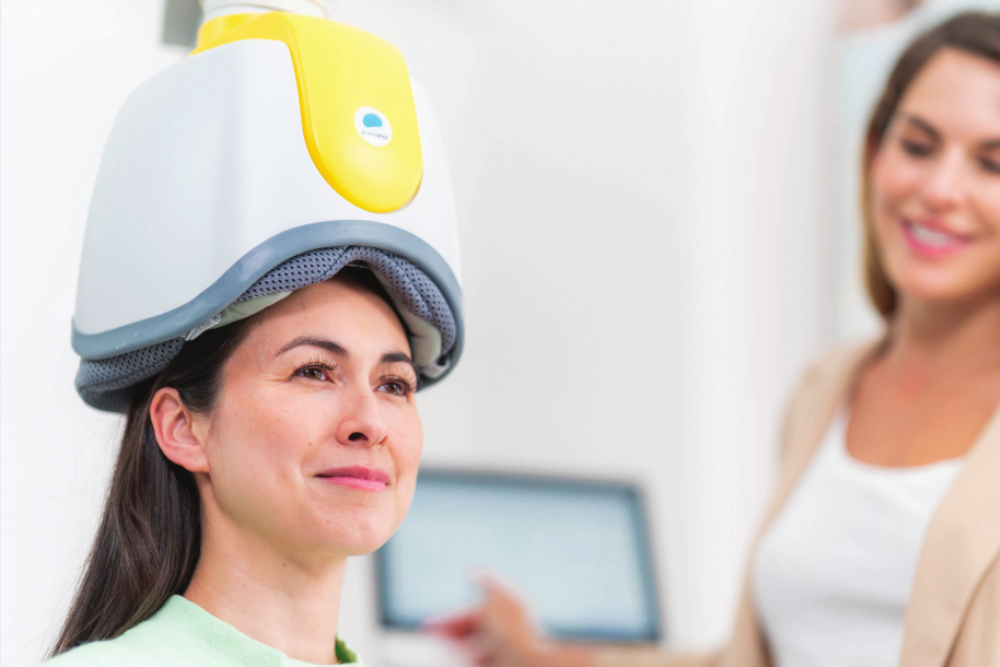
NPBTC provides Deep TMS rather than treating TMS as a generic, one-size-fits-all procedure. Deep TMS uses a specialized helmet to deliver magnetic stimulation to targeted brain regions. NPBTC uses BrainsWay H-Coil technology, which is designed to reach specific neural pathways associated with conditions including OCD.
Patients remain awake during treatment, and no anesthesia or sedation is required. Because there is no traditional recovery period, patients can generally return to their regular activities after an appointment.
For someone balancing treatment with work, school, caregiving, or other responsibilities, that can be an important practical consideration. Deep TMS treatment for OCD near Upper Dublin, Blue Bell is delivered over a series of scheduled visits rather than as a single session, allowing the team to monitor progress throughout the course of care.
TMS as Part of Comprehensive OCD Treatment
Deep TMS does not necessarily replace the other treatments a patient is already receiving. At NPBTC, TMS can be incorporated into a broader plan that may also include psychotherapy, psychiatric care, medication management, and ongoing professional support.
This comprehensive approach is particularly relevant for treatment-resistant or difficult-to-manage OCD because patients may have complicated treatment histories. Some may have been working with a therapist for years. Others may have tried multiple psychiatric medications or adjusted dosages over time. A patient may also have additional mental health concerns that need to be considered alongside OCD.
By evaluating these factors together, NPBTC can determine how Deep TMS may fit into the larger treatment picture rather than presenting it as an isolated service.
The Role of Psychiatry and Medication Management
Psychiatric care can remain an important part of treatment even when a patient begins exploring TMS. OCD symptoms, medication history, response to previous psychiatric treatment, and other mental health considerations all influence treatment planning.
For some patients, medication management may continue alongside Deep TMS. For others, psychiatric evaluation may help clarify which combination of services is appropriate. The important point is that TMS does not have to exist separately from a patient’s ongoing mental health care.
NPBTC’s integrated psychiatry and neurology expertise allows treatment decisions to be considered from multiple perspectives. We focus on personalized treatment planning, and an approach that brings together psychiatric and neurological experience when appropriate.
Treatment-Resistant OCD Therapies near Upper Dublin, Blue Bell
Before beginning treatment, patients undergo an individualized evaluation so our NPBTC team can better understand the nature of their OCD symptoms, previous treatment experiences, current concerns, and goals. This helps determine whether Deep TMS may be an appropriate addition to the treatment plan.
TMS is then provided through a series of in-office sessions. Patients remain awake while the Deep TMS device delivers magnetic stimulation to targeted brain regions associated with OCD. The treatment does not require anesthesia or sedation, and patients typically do not need downtime afterward. Throughout the process, our providers monitor progress, answer questions, and help patients understand what to expect as treatment continues.
This ongoing oversight is especially important for patients who have already been through multiple treatment approaches and want to understand how another option fits into their overall care.
Helping a Loved One Who is Struggling with OCD
OCD does not affect only the person experiencing the symptoms. Family members, partners, and other loved ones may also see how intrusive thoughts and compulsive behaviors are affecting everyday life. They may witness a loved one spending increasing amounts of time completing rituals, avoiding situations, asking repeatedly for reassurance, or becoming distressed when routines cannot be performed in a particular way.
Watching someone continue to struggle despite therapy or medication can leave family members unsure of what else can be done. Learning about additional treatment options is an important first step. Deep TMS may be worth exploring when OCD symptoms remain significant despite previous treatment, but determining whether it is appropriate requires an individualized professional evaluation.
Loved ones can provide valuable encouragement and support throughout this process while allowing the patient’s treatment team to determine the most appropriate therapeutic plan.
Why Choose NPBTC for TMS for OCD?
NPBTC provides Upper Dublin, Blue Bell Transcranial Magnetic Stimulation for OCD within a broader behavioral health setting that includes psychiatric and neurological expertise. Treatment is led by a team experienced in working with complex mental health and neurological conditions and uses BrainsWay Deep TMS technology. Our practice emphasizes individualized treatment planning and continued patient support throughout the treatment process.
For individuals who have already tried therapy, medication management, or other forms of psychiatric care without enough improvement, this integrated environment can make it easier to explore TMS without separating it from the rest of their treatment history.
Get Help for Your Ongoing Obsessions & Compulsions with Upper Dublin, Blue Bell Deep TMS
Living with OCD that remains difficult to control despite serious treatment efforts can be exhausting for patients and deeply concerning for their families. Psychotherapy and psychiatric care remain important treatment options, but they do not provide enough relief for every individual. When intrusive thoughts, compulsive behaviors, anxiety, and repetitive patterns continue to interfere with daily life, Deep TMS may provide an additional option to consider.
NPBTC offers TMS therapy for obsessive-compulsive disorder near Upper Dublin, Blue Bell, Pennsylvania, as part of a comprehensive approach to care. Please contact us online, or give our office a call at (215) 591-0700, to schedule a consultation and learn whether Deep TMS may be appropriate for you or your loved one when OCD symptoms have continued despite psychotherapy, psychiatry, medication management, or other previous treatment efforts.
TMS Therapy for Obsessive-Compulsive Disorder near Ambler, Blue Bell, Bridgeport, Colmar, Conshohocken, Dresher, Eagleville, East Norriton, Flourtown, Fort Washington, Glenside, Gwynedd Valley, Gwynedd, Hatboro, Horsham, King of Prussia, Kulpsville, Lafayette Hill, Lansdale, Norristown, North Wales, Oreland, Plymouth Meeting, Skippack, Spring House, Trooper, West Norriton, Willow Grove, Worcester, Wyndmoor, Ambler Yards, Ambler, Arlingham, Blue Bell, Belfry, Blue Bell, Blue Bell Woods, Blue Bell, Broad Axe, Blue Bell, Cedar Hill, Blue Bell, Center Square, Blue Bell, Custer, Blue Bell, Downtown Ambler, Ambler, Lower Gwynedd, Blue Bell, Normandy Farm area, Blue Bell, Parec Plaza, Blue Bell, Penllyn, Blue Bell, Sunnybrook, Blue Bell, Upper Dublin, Blue Bell, Whitpain Farm, Blue Bell, Whitpain Hills, Blue Bell, and surrounding areas.