


When balance feels unreliable and walking no longer feels automatic, everyday life can become far more difficult than it should be. A person may begin noticing unsteadiness on stairs, hesitation while turning, a slower pace, shortened steps, or a growing fear of falling in busy or unfamiliar places. Over time, these issues can affect confidence, independence, and overall quality of life. Even simple routines like shopping, getting out of a chair, walking across a parking lot, or moving around the home can start to require extra focus and energy. Loved ones often feel the impact as well, especially when they see someone they care about becoming more cautious, more frustrated, or less active because movement no longer feels dependable.
Despite these challenges, professional therapy can make a meaningful difference. With the right evaluation and a structured physical therapy plan, many patients are able to move more safely, improve walking mechanics, strengthen balance responses, and return to daily life with greater ease. Neurology, Psychiatry and Balance Therapy Center (NPBTC), is highly regarded for its balance and gait training therapy near Eagleville, Pennsylvania. Our renowned physical therapy program is personalized, neurologically informed, and focused on practical improvement in real world function.
Request an Appointment
Please do not include medical records or personal health information on this form.
Balance Disorder Treatments Eagleville, PA
Balance and gait issues are not a single diagnosis. Rather, they are categories of functional problems that can arise from many different causes. Balance refers to the body’s ability to remain stable and upright during standing, walking, turning, and changing position. Gait refers to the way a person walks, including pace, stride length, coordination, posture, and the ability to move smoothly from one step to the next. When balance and gait are working well, movement tends to feel natural. When something is off, walking can become slower, less efficient, or more stressful. A person may begin feeling unsteady even in situations that once felt routine.
One reason these problems can be so frustrating is that movement relies on many systems working together at the same time. Strength matters, but so do posture, coordination, vision, sensory feedback from muscles and joints, and the way the nervous system processes information about where the body is in space. Walking itself is a complex skill that depends on timing, balance reactions, mobility, and the ability to respond to changing surfaces and environments. If any part of that process becomes less efficient, a person may develop gait changes such as shorter steps, slower pace, difficulty clearing the feet, hesitation when turning, or instability during transitions.
Causes & Impacts
In some cases, the issue is tied to a neurological condition. In others, it may be connected to dizziness, vestibular dysfunction, deconditioning, or a general decline in strength and flexibility. That is why proper evaluation matters. Effective therapy begins with understanding what is most likely contributing to the problem rather than guessing or offering the same generic exercises to everyone.
The impact on daily life can be significant. Some people become less comfortable walking in crowds, on uneven ground, or in dim lighting. Others begin avoiding errands, exercise, stairs, or social plans because they do not feel steady enough to move with confidence. Even mild unsteadiness can gradually lead to more cautious movement, and that caution can sometimes create a cycle where the body becomes deconditioned and balance reactions grow weaker. The result is not only reduced function, but also reduced confidence. This is one of the reasons balance and gait therapy is so important. Good treatment does not only work on symptoms in a clinical setting. It helps people function better in the places and routines that matter most in everyday life.
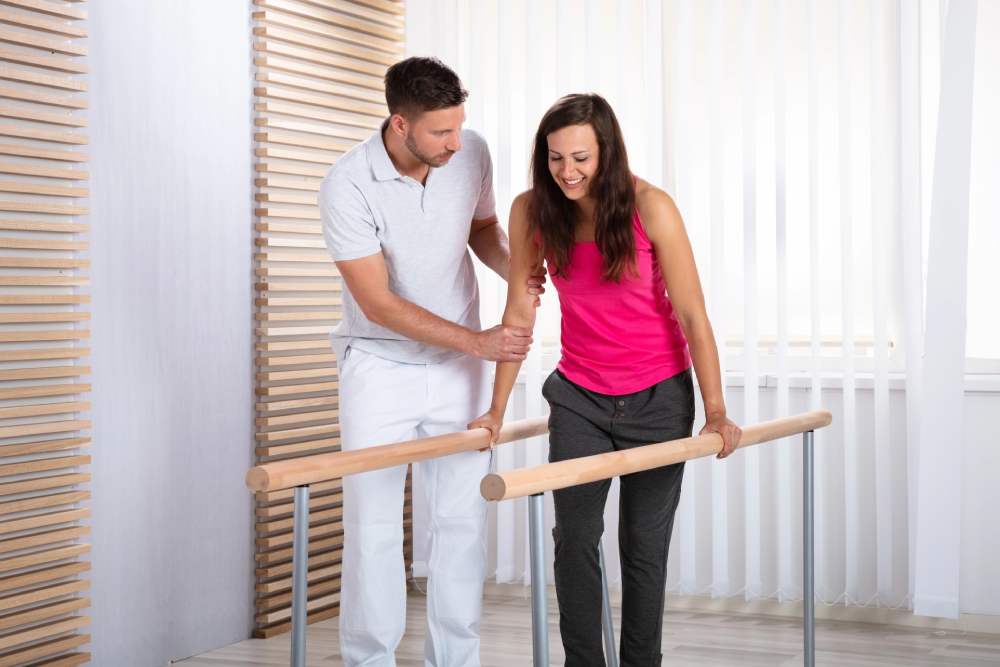
Eagleville Therapies to Address Gait and Balance Problems
At NPBTC, Eagleville balance and gait training treatment is centered on physical therapy. Our goal is simple in principle, even if the treatment process itself is highly individualized. We want to help patients feel steadier, safer, and more confident in their bodies again. We begin with a detailed physical therapy evaluation that looks closely at movement quality, gait mechanics, balance reactions, posture, strength, mobility, and the real life situations that are making movement harder. That initial assessment helps identify whether the problem seems most connected to sensory nerve changes, balance processing, dizziness, deconditioning, musculoskeletal issues, coordination issues, or a combination of factors. From there, we build a treatment plan that is practical, progressive, and tailored to the individual.
Focus on the Brain and the Body
For many patients, physical therapy is the central and most active part of treatment because it directly addresses the body’s ability to move efficiently and respond to challenges with more stability. This is not a one size fits all exercise program. At NPBTC, therapy is designed to improve the way the brain and body work together more effectively. Many balance and gait issues are influenced not only by strength, but also by how the nervous system processes information from vision, sensory feedback, and the vestibular system. When those signals are not coordinated well, a person may feel off balance, move cautiously, or struggle with walking even if they appear reasonably strong. Physical therapy helps close that gap by retraining movement patterns, rebuilding stability reactions, improving coordination, and gradually increasing tolerance to situations that once felt difficult or unsafe.
Treatment Exercises and the Value of Patient Education
Treatment may include gait training, balance retraining, transition practice, postural work, coordination exercises, walking drills, strengthening, mobility work, and fall prevention strategies. Some patients need help with turning or changing direction without losing balance. Others need to improve the way they respond to uneven surfaces, head movement, or crowded environments. Some benefit from structured work on stride length, step timing, and movement confidence. Others need a broader program that rebuilds the foundation for safer movement after a period of inactivity or decline. Because each person’s presentation is different, therapy is adjusted based on how the patient responds and what goals matter most in daily life.
Education is also a meaningful part of the therapy process. Many patients feel more comfortable and more motivated once they understand why symptoms are happening and what they can do in response. At NPBTC, physical therapy includes not only in clinic work but also guidance that helps reinforce progress between visits. A home program, practical strategies, and clear feedback can make it easier to stay consistent and carry improvements into everyday situations. The goal is not only to perform better during appointments. It is to help each patient move more confidently at home, in the community, and in the activities that make life feel full and independent.
Experienced Physical Therapists near Eagleville
A meaningful balance and gait training program near Eagleville does more than work on isolated exercises. It looks at the full movement experience. At NPBTC, our therapist may evaluate how you walk in open space, how you turn, how you respond to surface changes, how you move from sitting to standing, and how balance changes when visual input or environmental complexity increases. This helps us identify the specific moments where your system loses efficiency so the treatment plan can target the real sources of instability. That level of specificity matters because balance problems often show up most clearly in the exact moments people face every day, not just in a controlled therapy room.
Our physical therapy model is also built around one on one care. Patients are seen for focused treatment with licensed Doctors of Physical Therapy, including Dr. James Barsky and Dr. Ian Haslam. That one on one structure allows for closer observation, more precise progression, and clearer feedback throughout the rehabilitation process. It also makes it easier to tailor each session to the patient’s current presentation rather than forcing every person into the same routine. That individualized attention is especially valuable for patients whose symptoms have been difficult to explain, inconsistent, or disruptive across multiple environments.
The Benefits of Therapy
Many patients come to balance and gait therapy because walking no longer feels automatic. They may have become slower, more hesitant, or less confident, especially in situations that require turning, adjusting to visual distraction, or stepping onto uneven ground. Therapy helps address those challenges directly by giving patients structured opportunities to practice more efficient movement in a safe environment. Over time, this often helps reduce the fear that can develop around movement. When someone begins avoiding activity because of unsteadiness, the body can become weaker and balance reactions can worsen. Physical therapy helps interrupt that cycle by building strength, improving mechanics, and restoring a more reliable sense of movement control.
Another important benefit of physical therapy is that it supports function even when symptoms cannot be fully eliminated. For some neurological or long term balance conditions, the goal is not perfection. It is safer movement, better endurance, stronger reactions, and a greater sense of confidence in daily life. Therapy can help patients adapt to movement challenges in ways that preserve independence and reduce fall risk over time. That is a meaningful outcome in itself, and it is one of the reasons NPBTC approaches balance and gait training with such a strong emphasis on real world function rather than generic exercise alone.
Important Reasons Why Patients Select NPBTC for Balance and Gait Training
There are several reasons patients and families choose NPBTC when looking for balance and gait training treatments near Eagleville. One of the biggest is that physical therapy here is both neurologically informed and highly personalized. We understand that balance and gait problems can come from different causes and can affect different parts of life from one person to another. Some patients struggle most with turning, transitions, or walking in complex environments. Others are more limited by posture, slowed movement, balance reactions, or decreased confidence. At NPBTC, therapy is built around those differences. Rather than using the same general formula for everyone, we tailor treatment to the person’s actual symptoms, triggers, and goals. That helps therapy stay relevant, practical, and effective.
Another major advantage is the strength of the physical therapy program itself. Patients are seen one on one for up to an hour and receive care from a team that understands complex movement and balance presentations. Dr. James Barsky and Dr. Ian Haslam provide focused, hands-on physical therapy that is designed around real outcomes that matter to patients, such as walking safely, reducing fall risk, improving stability, and returning to meaningful activities. That level of focused attention can make a major difference, especially for people who have been living with symptoms for a long time or who feel that previous care did not fully address what they were experiencing.
Patients also trust NPBTC because of the way care is delivered. We emphasize clarity, encouragement, and a treatment plan that makes sense in the context of daily life. Balance and gait problems can feel intimidating, especially when they are changing over time or are difficult to explain. Patients want more than a label. They want to know what may be contributing to the issue, what can be done to improve function, and what progress may realistically look like. Our team takes that seriously. We know that improvement requires more than a diagnosis. It requires a plan, consistent support, and guidance that helps people move forward with greater confidence.
Improve Your Balance and Gait Issues with Our Physical Therapy Program near Eagleville, Pennsylvania
If you or a loved one is struggling with unsteadiness, walking difficulty, reduced movement confidence, or fear of falling, professional physical therapy may be the next important step. Balance and gait issues can make daily life feel smaller and more stressful, but the right treatment plan can help restore stability, function, and peace of mind.
At Neurology, Psychiatry and Balance Therapy Center, our physical therapy program is designed to help patients move more safely, build confidence, and improve the quality of their walking and balance in everyday life. NPBTC is a top choice for balance and gait training therapy near Eagleville, Pennsylvania, and we are proud to provide personalized, neurologically informed care that helps patients pursue safer movement and greater independence. To get started, give our office a call at (215) 591-0700 or submit a request for an appointment online.
Balance and Gait Training Treatments near Ambler, Blue Bell, Bridgeport, Colmar, Conshohocken, Dresher, Eagleville, East Norriton, Flourtown, Fort Washington, Glenside, Gwynedd Valley, Gwynedd, Hatboro, Horsham, King of Prussia, Kulpsville, Lafayette Hill, Lansdale, Norristown, North Wales, Oreland, Plymouth Meeting, Skippack, Spring House, Trooper, West Norriton, Willow Grove, Worcester, Wyndmoor, Ambler Yards, Ambler, Arlingham, Blue Bell, Belfry, Blue Bell, Blue Bell Woods, Blue Bell, Broad Axe, Blue Bell, Cedar Hill, Blue Bell, Center Square, Blue Bell, Custer, Blue Bell, Downtown Ambler, Ambler, Lower Gwynedd, Blue Bell, Normandy Farm area, Blue Bell, Parec Plaza, Blue Bell, Penllyn, Blue Bell, Sunnybrook, Blue Bell, Upper Dublin, Blue Bell, Whitpain Farm, Blue Bell, Whitpain Hills, Blue Bell, and surrounding areas.